🔥 BLOCKCHAIN @ Supply Chain Tech - where are we after years of value and hype?
Welcome to 23rd issue of insights, this time in area of A) Logistics & Shipping Industry insights - we look at the scene of Blockchain technology, its development and use cases that sticked!

For those that don’t know me, I’m Jakub Ctvrtnicek, senior solution consultant at LogTech space and I am issuing insights and letters in 3 workstreams: A) Logistics & Shipping Industry Insights, B) LogTech Reviews & Info and C) SAP Logistics Explanations & Updates.
1. Inherent Challenges in Supply Chains
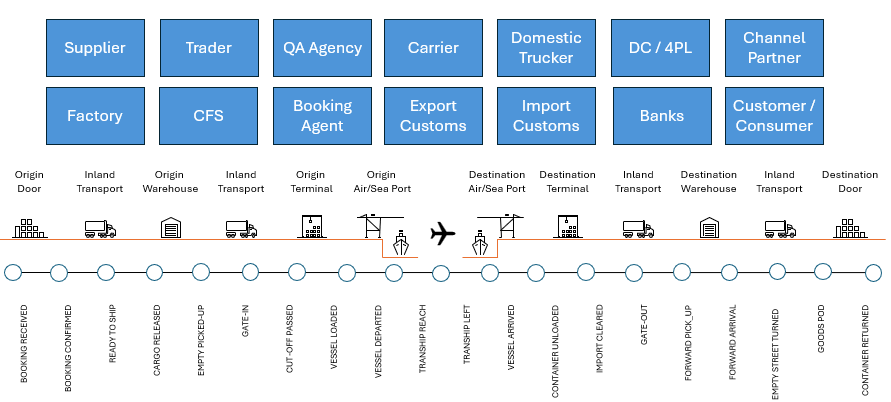
Supply chains are fundamentally complex due to their multiparty, multi-territory, and multi-location nature. A single product may pass through multiple different parties, each handling both the physical goods and the associated data to it. This leads to challenges in transparency, data exchange, and coordination. The core issue is that every participant, from shippers to logistics providers, adds their own data and processes, making it difficult to maintain a single source of truth and efficient collaboration. This is far before any blockchain was out there!
2. Supply Chain Tech Categories and Blockchain’s Role
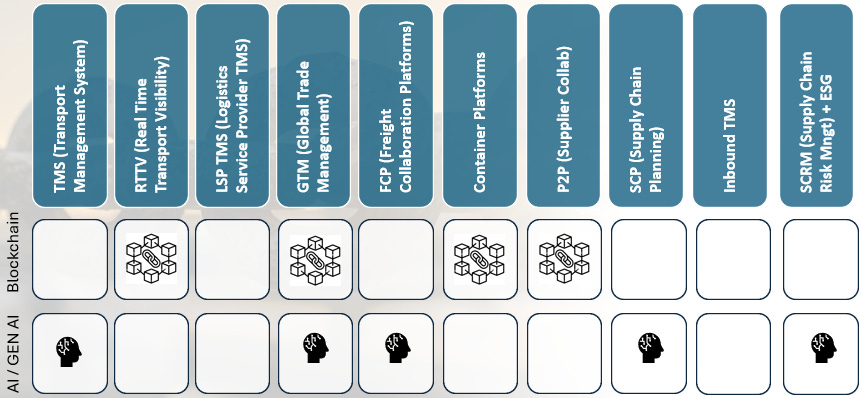
Over the past 20–25 years, supply chain technology has evolved from widespread adoption of ERP (Enterprise Resource Planning) systems to the rise of digital trade platforms, transportation management systems (TMS), and real-time visibility solutions. In the last cca five years, the main drivers have included blockchain/DLT, APIs, IoT-enabled tracking, and, more recently, AI and product lifecycle management tools.
Blockchain’s most significant roles are found in:
Real-time visibility and traceability: Ensuring product and data provenance.
Compliance and customs filing: Secure exchange of regulatory documents.
Supply chain finance: Facilitating trust and transparency in financial transactions1.
While blockchain has potential across various categories, its impact is most pronounced in areas requiring multiparty data integrity and trust.
3. Major Pillars for Blockchain Use Cases
Three primary pillars have emerged for blockchain applications in supply chains:
Product Traceability: Tracking the origin and / or movement of goods, supporting chain-of-custody and digital product passports.
Traceability of Information: Verifying the origin and authenticity of documents, certificates, and decisions.
Supply Chain Finance: Enabling secure, transparent, and efficient financial transactions, such as tokenized payments or asset exchanges.
4. Blockchain Projects That Failed
Several ambitious blockchain projects in supply chain have not succeeded, often due to misaligned incentives, insufficient value, or governance issues:
“TEU Token”: A Hong Kong-based initiative aimed at solving container overbooking in ocean shipping with smart contracts and crypto deposits. It failed to gain traction in the industry.
Swedbridge: Focused on supply chain finance and transparency between buyers and suppliers, but did not scale up.
TradeLens: A high-profile collaboration between Maersk and IBM for digital trade documentation. Despite technical promise, it failed due to centralized control by a single large player, which discouraged broader industry participation. The only successful component was the electronic bill of lading, which has since been adopted by other platforms. More about this project I wrote in this article!
5. Blockchain Projects That Operate
Several blockchain-based projects have demonstrated staying power and practical value1:
CargoX: Specializes in handling electronic bills of lading, providing secure and verifiable document transfer in shipping.
Singapore Chamber of Commerce’s Blockchain: Uses blockchain to authenticate certificates of origin, a critical document in international trade.
OriginTrail: Based in Slovenia, this project uses a decentralized knowledge graph on blockchain to record and verify compliance and safety certificates at the factory level, enabling retailers and importers to validate authenticity via API.
Everledger and TraceX: Focus on tracing the origin of goods and materials, filling a niche for provenance and sustainability verification.
In summary, blockchain’s promise in supply chain lies in solving persistent problems of trust, traceability, and multiparty collaboration. We have seen quite a hype between years 2017 to 2022 and see cooling now and next to it, blockchain is shadowed by atractive AI technology nowadays. What we are / were missing is not so much a new killer app, but rather new “killer business model” or “killer regulation” demanding any full scale adoption of blockchain in supply chain systems! 🌐
—
If this was interesting, leave a comment, write back or subscribe to my Newsletter. Alternatively you may reach me at jakub.ctvrtnicek@wise-chain-consult.com
Thank you!
Jakub
Copyright © 2024-2025 Wise Chain Consult, All rights reserved.
The text, knowledge and conclusion in this article is NOT generated by AI, it is human-through, edited by GenAI tool.